
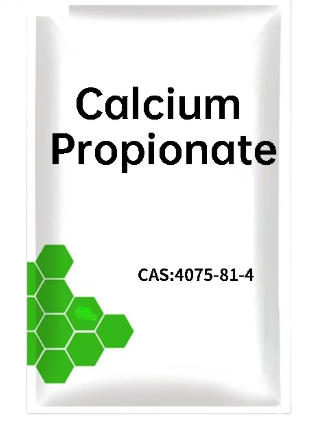
🧪 1️⃣ What Is Calcium Propionate?
Chemically speaking, calcium propionate (Ca(C₂H₅COO)₂) is the calcium salt of propionic acid, a naturally occurring compound produced by certain bacteria during fermentation.
It appears as a white, crystalline powder, easily soluble in water, odorless, and stable under normal storage conditions.
In foods, it serves one powerful purpose:
➡️ To prevent mold and bacterial spoilage without affecting flavor, color, or yeast activity.
| Parameter | Description |
|---|---|
| Chemical formula | Ca(C₂H₅COO)₂ |
| E-number | E282 |
| Appearance | White crystalline powder |
| Solubility | 49 g/L at 0°C |
| pH (1% solution) | 7–9 |
| Stability | Excellent during baking and storage |
🍞 2️⃣ The Challenge of Bread Preservation
Freshly baked bread is a perfect microbial playground — warm, moist, and rich in nutrients.
Left unprotected, it becomes a feast for molds and rope-forming bacteria (Bacillus species), leading to:
Green or black mold spots
Sticky or discolored crumb (rope spoilage)
Off-odors and reduced shelf life
Since consumers expect soft bread with no preservatives’ taste, bakers face a delicate balance: protection without compromise.
That’s where calcium propionate shines.
🦠 3️⃣ How Calcium Propionate Works
It’s not the calcium that does the magic — it’s the propionate ion (C₂H₅COO⁻) released when dissolved in the dough.
Here’s the microbiological mechanism:
1️⃣ In the slightly acidic environment of bread dough (pH 5.0–6.0), propionic acid forms.
2️⃣ This acid diffuses through microbial cell membranes.
3️⃣ Once inside, it disrupts metabolism, inhibiting enzymes responsible for energy production.
4️⃣ Result: Molds and Bacillus can’t grow, extending freshness naturally.
Unlike strong acids, propionate works selectively — it’s harmless to baker’s yeast, allowing normal fermentation and volume development.
📊 4️⃣ Effective Usage in Bakery Applications
| Product Type | Recommended Dosage (% on flour weight) | Target Microbes | Shelf-Life Benefit |
|---|---|---|---|
| White bread | 0.2–0.3% | Molds, rope bacteria | +4–6 days |
| Whole wheat bread | 0.25–0.35% | Molds | +3–5 days |
| Cakes & pastries | 0.1–0.2% | Mold, yeast | +2–4 days |
| Tortillas / flatbreads | 0.3–0.5% | Mold | +5–8 days |
At these levels, it maintains freshness and softness while keeping the taste profile neutral.
⚙️ 5️⃣ Why Bakers Prefer Calcium Propionate Over Others
| Feature | Benefit to Bakery Applications |
|---|---|
| Heat-stable | Survives baking temperatures |
| pH-independent performance | Effective in neutral doughs (unlike benzoates) |
| No yeast inhibition | Allows natural fermentation |
| Calcium fortification | Slight nutritional benefit |
| Odorless & tasteless | Clean label appearance |
In essence, it keeps bread fresh without anyone noticing it’s there — chemistry at its most elegant.
🧠 6️⃣ A Comparison: Calcium Propionate vs. Other Preservatives
| Preservative | Effective pH Range | Microbial Target | Suitability for Bread |
|---|---|---|---|
| Sodium benzoate | <4.5 | Yeasts, molds | ❌ Not ideal (bread too neutral) |
| Potassium sorbate | <6.0 | Molds, yeasts | ⚠️ Limited in high pH doughs |
| Calcium propionate | 4.5–7.0 | Molds, Bacillus | ✅ Excellent choice |
| Vinegar (acetic acid) | <4.5 | Bacteria | ⚠️ Alters flavor |
This makes calcium propionate the gold standard for bakery mold prevention worldwide.
🌿 7️⃣ Safety and Global Acceptance
Approved by FAO/WHO JECFA, FDA, and EFSA, calcium propionate is recognized as GRAS (Generally Recognized As Safe).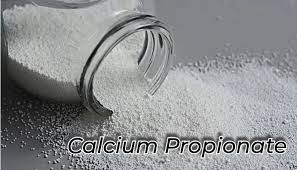
Once consumed, it’s metabolized like any natural fatty acid and converted into energy — leaving no harmful residue.
It’s even naturally produced by bacteria in the human gut!
🧩 Fact: Human metabolism produces and handles small amounts of propionate every day. Nature’s own preservative — just refined for precision.
🏭 8️⃣ Industrial & Storage Advantages
From an industrial perspective, calcium propionate also offers:
✅ Excellent storage stability — no caking or odor
✅ Compatibility with calcium-reinforced formulations
✅ Dry mix or aqueous solution dosing flexibility
✅ Synergy with pH regulators and emulsifiers
These properties make it a favorite for large-scale bread lines, pre-mix factories, and instant bakery blends.
🌍 9️⃣ Tynod Chemistry — Your Reliable Partner in Food Preservation
At Tynod Chemistry, we supply high-purity Calcium Propionate (E282) with:
💎 Purity ≥ 99% (food & pharma grade)
🧂 Uniform, free-flowing granules
⚡ Fast solubility and consistent performance
🚀 Reliable global supply and prompt shipment
🌱 Compliant with FCC, GB, and EU standards
| Specification | Value |
|---|---|
| Assay (dry basis) | ≥99.0% |
| Moisture | ≤5.0% |
| Water Insoluble Matter | ≤0.1% |
| Lead (Pb) | ≤2 mg/kg |
Your bakery deserves ingredients that protect quality as much as they express craftsmanship.
With Tynod Chemistry, every loaf travels further, stays fresher, and delights longer.
✨ 10️⃣ In Essence
Bread is born from life itself — water, grain, yeast, and warmth.
Yet it’s calcium propionate that keeps that life stable —
guarding its softness from unseen time,
preserving flavor, texture, and trust in every bite. 🍞💫