TAIAN TYNOD CHEMISTRY CO., LTD.

Bickey

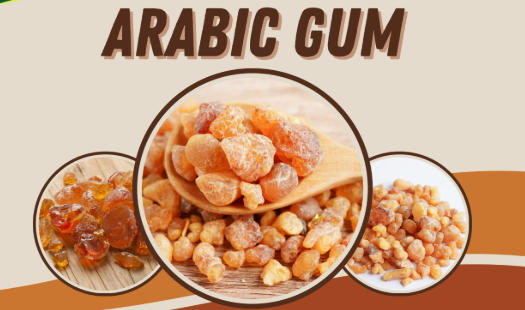
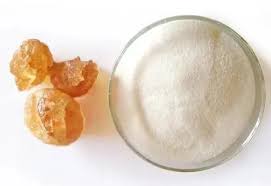
Arabic Gum: A Natural Stabilizer for Premium Food Formulations

Arabic Gum: A Natural Stabilizer for Premium Food Formulations As the global food industry shifts toward cleaner labels and natural ingredients, Arabic gum has emerged as a standout choice for formulators seeking superior stability, texture enhancement, and natural functionality. Sourced from the sap of acacia trees, Arabic gum delivers a unique combination of clean-label appeal […]

Arabic Gum: A Natural Stabilizer for Premium Food Formulations Read More »

sodium alginate

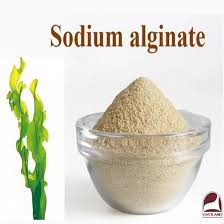
How does sodium alginate compare to xanthan gum, carrageenan, and other hydrocolloids?

Algine(Sodium alginate) sits in a fascinating position among hydrocolloids—neither as elastic as xanthan gum, nor as protein-reactive as carrageenan, yet uniquely capable of calcium-controlled gelation, clean viscosity, and reliable stabilization across food systems. To understand its value, we need to look at how it performs side by side with its closest functional competitors. Below is

How does sodium alginate compare to xanthan gum, carrageenan, and other hydrocolloids? Read More »

sodium alginate

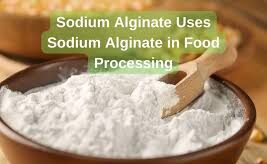
What makes sodium alginate a versatile hydrocolloid in modern food manufacturing?

Sodium alginate earns its place in modern food manufacturing not by noise, but by quiet mastery. It is one of those rare hydrocolloids that bends itself to the will of the formulator—flowing, gelling, thickening, stabilizing—yet always remaining clean-label, sea-born, and utterly dependable. Let me unfold its strengths for you with the clarity of science and

What makes sodium alginate a versatile hydrocolloid in modern food manufacturing? Read More »

inulin powder

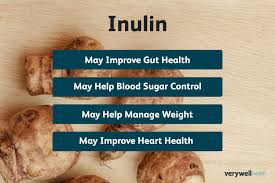
What makes inulin a powerful natural prebiotic fiber in modern food formulations?

🌱 A Prebiotic With Real Biological Impact Inulin is a soluble dietary fiber found naturally in chicory root, agave, Jerusalem artichoke, onions, and garlic. What makes it powerful is its selective prebiotic action—it passes through the upper digestive tract untouched, reaching the colon where it becomes nutrient fuel for beneficial bacteria such as Bifidobacteria. This

What makes inulin a powerful natural prebiotic fiber in modern food formulations? Read More »

preservative

How does Tynod Chemistry balance safety, purity, and sustainability in preservative supply?

🌍 How Does Tynod Chemistry Balance Safety, Purity, and Sustainability in Preservative Supply? In an age when consumers read labels as carefully as literature, and every ingredient carries a story, the real question is not “What do you sell?”It’s “How responsibly do you make it?” At Tynod Chemistry, that question defines every drum we fill,

How does Tynod Chemistry balance safety, purity, and sustainability in preservative supply? Read More »

How is pectin extracted from citrus peels and apple pomace?

Lovely — let’s get practical, precise, and (a little) poetic. Below is a clear, technically accurate, and user-friendly guide on how pectin is extracted from citrus peels and apple pomace. It includes step-by-step workflows, typical process parameters, quality checks, yields, alternative/green methods, and scale-up / regulatory notes — everything a formulation or procurement manager at

How is pectin extracted from citrus peels and apple pomace? Read More »

Why do sports nutrition products rely on maltodextrin for energy release?

⚗️ 1️⃣ What Exactly Is Maltodextrin? Maltodextrin is a partially hydrolyzed starch polymer — a chain of glucose molecules (DE 3–20) produced from corn, tapioca, or potato starch.It’s not as sweet as sugar, yet it behaves like a fast-digesting carbohydrate — a rare balance of mild taste, high solubility, and rapid energy release. Chemically, it

Why do sports nutrition products rely on maltodextrin for energy release? Read More »

maltodextrin

How does maltodextrin support flavor encapsulation in food systems?

🌿 1️⃣ What Is Maltodextrin? Maltodextrin is a partially hydrolyzed starch polymer, typically produced from corn, potato, rice, or tapioca.It consists of glucose chains (DE value 3–20) — short enough to be soluble, but long enough to have film-forming and stabilizing properties. Chemically speaking, it bridges the world between sugars and starches — a light

How does maltodextrin support flavor encapsulation in food systems? Read More »

stevia

Why is stevia considered a natural alternative to synthetic sweeteners?

Ah, stevia — the green leaf that changed how the world tastes sweetness. 🌿In an era when people fear artificiality but crave indulgence, stevia emerged like a whisper from nature itself: sweet, calorie-free, and honest. Let’s explore — scientifically and emotionally — why stevia is hailed as a natural alternative to synthetic sweeteners, and how

Why is stevia considered a natural alternative to synthetic sweeteners? Read More »

Scroll to Top