
🌿 Introduction: The Symphony of Senses
Every flavor begins as a molecule,
but it ends as an emotion.
The sweetness of honey, the tang of lemon, the comforting warmth of cocoa — these sensations do more than please the tongue. They awaken memory, comfort, nostalgia, and joy.
Behind this experience lies flavor chemistry, a field that blends the precision of science with the intuition of art.
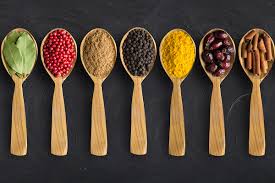
At Tynod Chemistry, with over 20 years of expertise in food additives, flavor enhancers, and natural extracts, we’ve come to see flavor not as a product — but as a living language, shaped by both laboratory mastery and creative inspiration.
⚗️ The Science of Flavor: Understanding the Invisible
Flavor chemistry is the study of how molecules interact with our senses of taste and smell.
Each aroma and taste compound stimulates receptors in the tongue and nose, sending messages to the brain — where chemistry transforms into sensation.
Five Basic Tastes
Sweet – sugars, polyols, and sweeteners like glucose or aspartame
Sour – acids like citric acid or malic acid
Salty – sodium ions, MSG
Bitter – alkaloids, caffeine
Umami – glutamates, nucleotides
But flavor goes far beyond these five. It’s built from volatile compounds, esters, aldehydes, terpenes, and ketones — each molecule contributing a distinct note to the final sensory composition.
In science, flavor is a formula.
In art, flavor is a feeling.
In Tynod Chemistry, it’s both.
🎨 The Art of Flavor: More Than Molecules
Science can tell us how flavors work.
But only art can tell us why they move us.
Flavorists — the artists of chemistry — use their intuition to blend natural extracts and synthetic molecules into experiences that delight the human spirit. They work like perfumers for the palate, crafting harmony between sweetness and acidity, warmth and brightness.
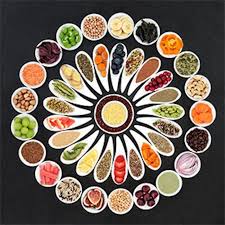
At Tynod Chemistry, our experts balance precision with imagination — combining natural extracts, essential oils, and scientifically engineered compounds to create flavors that are consistent, safe, and emotionally resonant.
🌸 The Bridge Between Nature and Science
Flavor chemistry is not a choice between natural and synthetic — it’s a conversation between them.
Natural extracts bring authenticity and complexity, while synthetic compounds bring stability and precision.
| Aspect | Natural Extracts | Synthetic Compounds |
|---|---|---|
| Origin | From plants, fruits, herbs | From controlled chemical synthesis |
| Character | Complex, evolving aroma | Clean, consistent profile |
| Cost | Higher, limited supply | Economical, scalable |
| Usage | Premium & clean-label foods | Beverages, confectionery, pharmaceuticals |
| Goal | Authentic sensory depth | Reproducible flavor accuracy |
Both are essential — the art comes in choosing the right balance.
🌍 The Role of Food Additives in Flavor Chemistry
Behind every irresistible flavor is a family of supporting food additives that ensure balance, texture, and longevity.
| Additive Type | Representative Product | Function in Flavor Chemistry |
|---|---|---|
| Thickener | Xanthan Gum | Enhances mouthfeel, carries flavor evenly |
| Flavor Enhancer | Monosodium Glutamate (MSG) | Boosts umami, intensifies taste perception |
| Sweetener | Glucose, Aspartame | Provides controlled sweetness and energy balance |
| Acidulant | Citric Acid | Balances pH, adds brightness to taste |
| Preservative | Potassium Sorbate | Extends shelf life without altering aroma |
| Pharma Excipient | MCC, PVP, PEG | Ensures uniform dispersion in flavored medications |
This is where Tynod Chemistry’s expertise shines — connecting molecular behavior with sensory experience, ensuring that every flavor performs perfectly from production to plate.
🔬 Precision Meets Passion: Inside Flavor Creation
Creating a flavor involves three dimensions — science, emotion, and purpose.
Analysis – Identifying key volatile compounds in natural foods through techniques like GC-MS (Gas Chromatography-Mass Spectrometry).
Design – Selecting and blending natural and synthetic molecules to replicate or enhance the aroma.
Testing – Evaluating flavor behavior in real food matrices (heat, pH, fat content, etc.).
Emotion – Adjusting subtleties — a hint of warmth, a whisper of freshness — until chemistry becomes character.
Each Tynod Chemistry formulation undergoes strict quality control, ensuring stability, reproducibility, and compliance with FCC, HACCP, ISO, Halal, and Kosher standards.
🧠 Flavor Chemistry as a Language
Think of flavor chemistry as a language of molecules.
Citral speaks the brightness of lemon.
Vanillin whispers warmth and comfort.
Menthol breathes cool clarity.
Cinnamaldehyde sings of spice and nostalgia.
When blended, these molecules form sentences, paragraphs, entire poems that the human palate can read without words.
That is the art — and the science — of flavor.
💡 The Emotional Dimension of Flavor
Flavor triggers emotion because it activates the limbic system — the brain’s center of memory and feeling.
That’s why a whiff of cinnamon may remind someone of home, or a taste of mango recalls a childhood summer.
Flavor chemistry thus becomes a bridge between the molecular and the emotional, between production and perception.
At Tynod Chemistry, we approach every project — from sweeteners to savory enhancers — as an emotional design process, not just a technical one.
🧾 The Business of Flavor: Quality, Consistency, Trust
Beyond artistry, flavor chemistry must meet industrial demands:
Reproducibility — every batch must taste identical.
Stability — flavors must survive heat, storage, and transport.
Safety — ingredients must comply with global standards.
With over 20 years of experience, Tynod Chemistry has become a trusted supplier of food additives and flavor ingredients that meet the needs of food, beverage, and pharmaceutical manufacturers worldwide.
Our competitive pricing, rapid logistics, and professional service ensure that innovation never stops at your production line.
📸 Suggested Visuals for the Article
Header Image: A scientist blending colorful essences in glass vials beside natural fruits — captioned “Where Molecules Meet Imagination.”
Infographic: “Flavor Chemistry = Art + Science” — a split design with lab equipment on one side and a painter’s palette on the other.
Macro Shot: Vanillin crystals and vanilla beans side-by-side — symbolizing the union of synthetic precision and natural beauty.
Sensory Chart: A wheel showing flavor categories — fruity, floral, spicy, creamy, woody, etc.
Quote Card:
“Every flavor is a story written in molecules.”
— Tynod Chemistry
🌈 Future Trends in Flavor Chemistry
The future of flavor chemistry lies in sustainability and transparency.
Consumers want authenticity — but they also want accessibility. That’s why innovation today focuses on:
Bio-synthetic flavors using natural fermentation.
Clean-label additives with minimal processing.
AI-assisted flavor modeling for faster formulation.
Cross-industry collaboration between chemists, chefs, and perfumers.
Tynod Chemistry stands at the forefront of this evolution — building bridges between tradition and technology, between chemistry and creativity.
✨ Conclusion: The Harmony of Science and Soul
Flavor chemistry is the rare discipline where molecules dance with imagination.
It is the dialogue between precision and poetry, between the lab and the human heart.
At Tynod Chemistry, we believe that flavor is not manufactured — it is composed.
Every additive, every compound, every drop carries both scientific rigor and artistic intent.
We are not just suppliers of ingredients.
We are curators of taste, architects of sensory emotion, and your partners in innovation.