
🌿 1️⃣ What Is Maltodextrin?
Maltodextrin is a partially hydrolyzed starch polymer, typically produced from corn, potato, rice, or tapioca.
It consists of glucose chains (DE value 3–20) — short enough to be soluble, but long enough to have film-forming and stabilizing properties.
Chemically speaking, it bridges the world between sugars and starches — a light carbohydrate cloak for flavor molecules.
🧪 2️⃣ The Science Behind Flavor Encapsulation
Flavor encapsulation means trapping volatile and delicate flavor molecules inside a protective matrix — usually a carbohydrate wall — to:
Prevent oxidation and evaporation
Enhance stability during processing and storage
Allow controlled release of flavor during consumption or rehydration
And here’s where maltodextrin shines.
🧬 3️⃣ Why Maltodextrin Is Perfect for Flavor Encapsulation
| Functional Property | Role in Encapsulation | Why It Matters |
|---|---|---|
| Low sweetness | Doesn’t distort original flavor | Keeps profile neutral |
| Good solubility | Rapid dissolution in water | Easy flavor release |
| Film-forming ability | Creates strong protective wall around flavor | Prevents oxidation & loss |
| Low hygroscopicity | Reduces stickiness in powders | Better flow & shelf life |
| Carrier compatibility | Mixes with gums, proteins, or emulsifiers | Flexible system design |
| Clean taste | Neutral carrier | Ideal for fruit, spice, coffee, or dairy notes |
Essentially, maltodextrin acts like a microscopic shield — embracing fragile aroma compounds so they can travel safely from factory to flavor.
🌸 4️⃣ Typical Flavor Encapsulation Process
Spray Drying (most common)
1️⃣ Create a flavor emulsion: flavor oil + emulsifier + maltodextrin solution.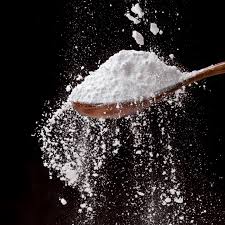
2️⃣ Atomize the mixture into fine droplets.
3️⃣ Hot air rapidly dries the droplets, forming flavor-loaded microcapsules.
4️⃣ Result: dry, free-flowing powder with long-lasting aroma.
Maltodextrin forms the outer matrix, while the flavor core stays trapped within.
The lower its DE (dextrose equivalent), the better its film-forming and protection properties.
💡 Typical Formulation Table
| Ingredient | Typical Range (% w/w) | Function |
|---|---|---|
| Flavor oil or essence | 10–20% | Core flavor |
| Maltodextrin (DE 5–10) | 60–80% | Wall material / carrier |
| Gum arabic or modified starch | 5–10% | Emulsifier / co-carrier |
| Antioxidant (optional) | 0.1–0.5% | Prevent oxidation |
The ratio of wall to core material (usually 4:1 to 8:1) determines encapsulation efficiency and flavor release profile.
🔥 5️⃣ Advantages in Real Food Systems
| Application | Function of Maltodextrin | Result |
|---|---|---|
| Instant beverages | Carries coffee or tea aroma | Stable, non-sticky powder |
| Snack seasoning | Disperses flavor evenly | Improved flavor retention |
| Dairy powders | Encapsulates vanilla/chocolate | Creamy flavor release |
| Fruit powders | Protects natural volatiles | Extended shelf life |
| Sauce & soup mixes | Soluble flavor carrier | Smooth dispersion in water |
Maltodextrin doesn’t just “carry” flavor — it curates it.
⚖️ 6️⃣ Choosing the Right Maltodextrin
| DE Value | Characteristics | Recommended Use |
|---|---|---|
| 3–7 | High molecular weight, strong film | Best for flavor encapsulation |
| 8–12 | Balanced solubility and protection | Beverages, snacks |
| 13–20 | High solubility, lower viscosity | Quick-release flavor systems |
Lower DE = better protection
Higher DE = better solubility
Tynod Chemistry’s maltodextrins can be customized across DE values to match the application — whether you’re targeting flavor protection or instant solubility.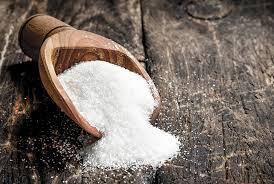
🧴 7️⃣ Flavor Release — The Magic Moment
When water or heat hits the microcapsule, maltodextrin dissolves instantly, releasing the trapped volatiles.
This “controlled release” ensures:
Stronger aroma upon reconstitution
Uniform taste experience
Minimal flavor degradation over shelf life
In other words, the consumer smells the same freshness your lab first created.
🌍 8️⃣ Market & Trend Insight
Global demand for encapsulated flavors is rising due to clean-label and convenience foods.
Maltodextrin remains the preferred carrier (used in >70% of spray-dried flavor systems).
Innovations include blends with resistant starch or inulin for fiber-enriched systems.
Asia-Pacific leads production and usage, with strong export from China and India.
🌾 9️⃣ Why Tynod Chemistry’s Maltodextrin Stands Out
🌱 Derived from non-GMO corn or tapioca
⚙️ Tailored DE ranges (5–18) for different encapsulation systems
🧪 Excellent film strength and solubility balance
📦 Stable supply and custom packaging options (25 kg bags)
🌐 Exported to Europe, Asia, Middle East, and South America
When flavor matters, consistency is everything — and that’s where our maltodextrin excels.
✨ In Essence
Maltodextrin is more than a carrier —
it’s the canvas upon which flavors are painted.
It protects fragrance from the cruelty of heat, time, and oxygen,
so that when the consumer opens the packet — the story of aroma begins again.
“Maltodextrin is chemistry in the service of emotion —
a molecule that lets flavor travel safely through time.”
— Tynod Chemistry