
🌿 What Is an Enzyme?
An enzyme is a biological catalyst — a protein (or sometimes RNA) that speeds up chemical reactions without being consumed itself.
In nature, enzymes are the invisible hands of life: they help plants grow, animals digest food, and humans turn nutrients into energy.
In the food industry, enzymes are harnessed for their precision and efficiency.
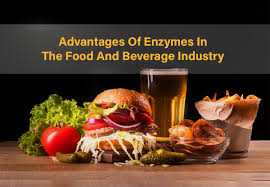
They make processes cleaner, faster, and more sustainable — replacing harsh chemicals with gentle biological action.
⚗️ How Enzymes Work
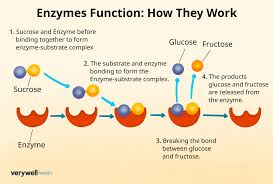
Every enzyme has a specific shape, designed to match a particular substrate (the molecule it acts on).
Think of it as a lock-and-key system:
The enzyme is the lock.
The substrate is the key.
When they meet, a reaction happens — starch breaks down, protein softens, fat emulsifies, etc.
After the reaction, the enzyme is released unchanged and can act again and again.
🧬 Common Enzymes Used in Food Processing
Here’s a table that shows the main categories, sources, and functions of food-grade enzymes:
| Enzyme Name | Type | Source | Function in Food Industry | Typical Applications |
|---|---|---|---|---|
| Amylase | Carbohydrase | Bacteria, fungi, malt | Breaks starch into sugars | Bread, beer, glucose syrup |
| Protease | Proteinase | Bacteria, papaya, pineapple | Breaks down proteins | Meat tenderizer, cheese, soy sauce |
| Lipase | Esterase | Microbial, animal, plant | Breaks down fats | Dairy, baking, flavor enhancement |
| Lactase | β-Galactosidase | Yeast, fungi | Breaks lactose into glucose & galactose | Lactose-free milk |
| Cellulase | Glycosidase | Fungi | Degrades cellulose | Juice clarification, coffee extraction |
| Pectinase | Hydrolase | Fungi | Breaks down pectin | Fruit juice, wine |
| Invertase | Hydrolase | Yeast | Splits sucrose into glucose & fructose | Candies, fondants |
| Glucose Isomerase | Isomerase | Bacteria | Converts glucose → fructose | High Fructose Corn Syrup (HFCS) |
Each of these enzymes is natural, biodegradable, and non-toxic, aligning with modern clean-label and sustainable manufacturing trends.
🧾 How Enzymes Are Listed on Food Labels
Food enzymes are regulated and listed according to local or international standards — typically by their functional name, not their chemical composition.
1. In Ingredient Lists (Food Labels):
On packaged foods, enzymes are usually declared as:
“Enzyme” (general term, when it remains active in the product)
Or by function:
“Amylase (enzyme)”
“Protease (enzyme)”
“Lactase (enzyme)”
If the enzyme is used only as a processing aid (e.g., to break starch during production and then removed or inactivated), it may not appear on the ingredient list in many countries, such as under FDA or EU Regulation (EC) No 1332/2008 — because it doesn’t have a technological function in the final food.
2. In Industrial Product Catalogs:
Companies like Tynod Chemistry (if you also offer enzymes) would list them in the Food Enzyme category, specifying:
| Product Name | Enzyme Activity (U/g) | Form | Applications |
|---|---|---|---|
| α-Amylase | 50,000 U/g | Powder | Starch hydrolysis, bakery |
| Glucose Isomerase | 20,000 U/g | Granule | HFCS production |
| Protease | 100,000 U/g | Liquid | Meat processing, dairy |
| Lipase | 10,000 U/g | Powder | Flavor improvement, emulsification |
This format helps B2B buyers evaluate purity, potency, and intended use.
🌱 Why Enzymes Matter in Modern Food Industry
Natural & Safe: They replace synthetic chemicals.
Efficient: Small amounts catalyze large-scale reactions.
Sustainable: Lower energy use, less waste, eco-friendly.
Precise: Highly selective — no unwanted side reactions.
In short: enzymes bring nature’s precision into industrial production.
💡 Example from Tynod Chemistry’s Portfolio (Hypothetical)
Product: Food-Grade α-Amylase
Function: Starch Hydrolysis
Applications: Bakery, Brewing, Glucose Syrup
Advantages:
Stable at wide pH (5.0–7.0)
Consistent enzyme activity
Certified under ISO and HACCP systems
Label Recommendation: “Contains enzyme (amylase)”
Export Description: “Food-Grade α-Amylase, Enzyme Preparation for Starch Hydrolysis, FCC Grade”
✨ In Essence
Enzymes are the quiet craftsmen of modern food — unseen, unconsumed, but indispensable.
They are not additives in the traditional sense, but biological tools that enable clean, efficient, and sustainable food processing.
They turn starch into sweetness, milk into softness, and dough into life.
“Where chemistry ends, life’s enzymes begin —
turning science into nourishment,
and raw ingredients into art.”
— Tynod Chemistry